
The link between HIV-like viruses and LINE-1
Retroviruses evolved from ancient retrotransposons. Some HIV drugs already inhibit LINE-1 - a head start for therapies aimed at diseases of aging
What is the link between HIV and virus-like elements in your DNA that can activate in disease? And can we leverage HIV medicines to treat other diseases?
Long ago, before retroviruses such as HIV existed, there were retrotransposons. These are virus-like genetic elements inside the DNA of cells. They selfishly spread copies of themselves across the genome. They can also be passed from parent to child. Today, retrotransposons make up almost half of your DNA
Retrotransposons are silenced in healthy cells, but can reactivate in some illnesses. These illnesses include certain infections, brain diseases and cancers. This then causes DNA damage and inflammation
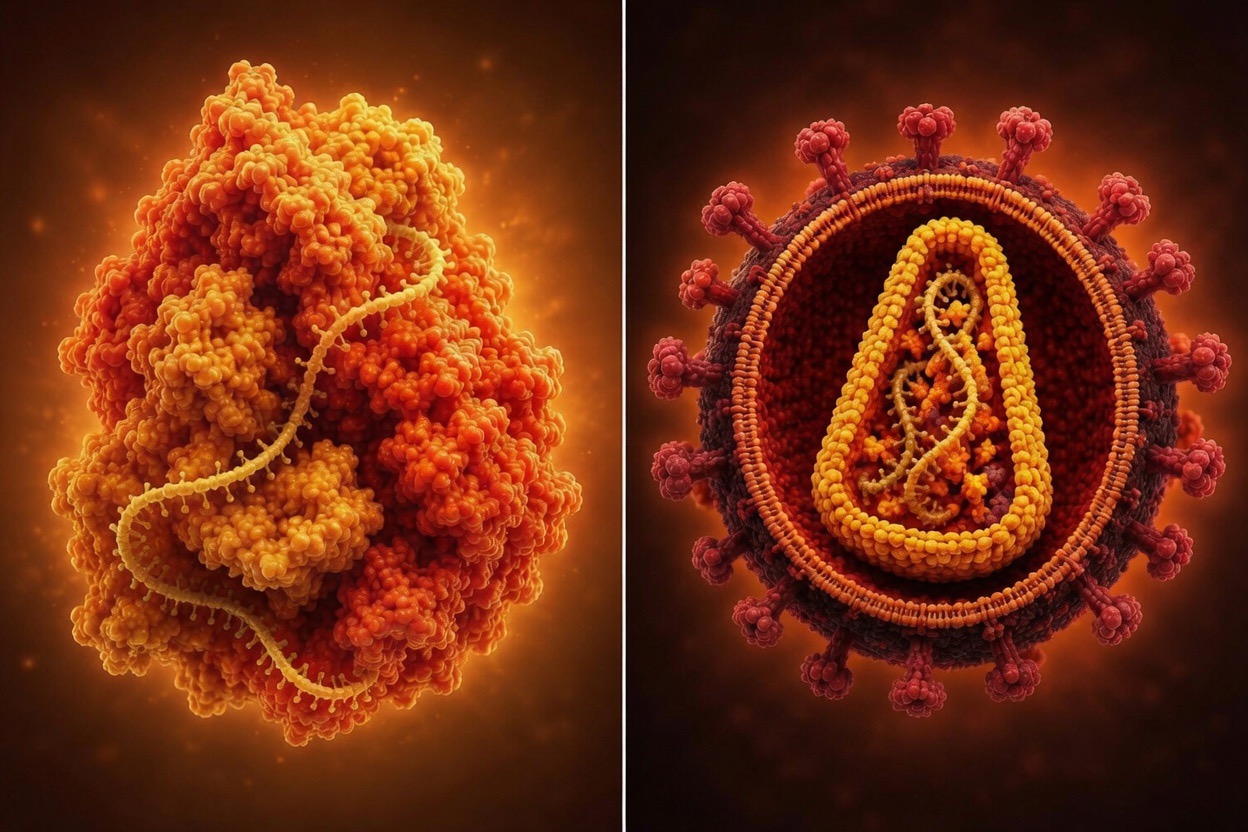
Over time, retroviruses evolved from ancient retrotransposon-like elements, gaining the ability to move between individuals rather than only within a genome. They both rely on an enzyme called reverse transcriptase. This enzyme copies RNA into your genome's DNA
Some HIV & hepatitis medicines prevent the viruses from copying their RNA into your genome. They are called nucleoside or nucleotide reverse transcriptase inhibitors (NRTIs). They look similar to DNA building blocks. When the enzyme uses one of these molecules by mistake, RNA→DNA copying stops early. This helps block the virus from inserting into the genome and replicating itself. NRTIs are very effective in HIV and can be used by patients for many years
Scientists have discovered that NRTIs also inhibit LINE-1, a human retrotransposon. However, NRTIs do not significantly inhibit other enzymes that use DNA building blocks. This makes LINE-1 a possible target for new therapies. L1 Therapeutics was founded to figure out when LINE-1 reactivation matters most, which patients might benefit, and how much blocking LINE-1 can help treat diseases. Scientific advances, genome sequencing technology & AI are now making this possible
© L1 Therapeutics 2026 · Reuse with attribution: Published by William Brandler, L1 Therapeutics · January 20, 2026
Have a question about this piece, or a collaboration in mind? Get in touch