
On giant tortoise and naked mole rat longevity
What two very different long-lived species teach us about retrotransposons, evolutionary trade-offs, and disease
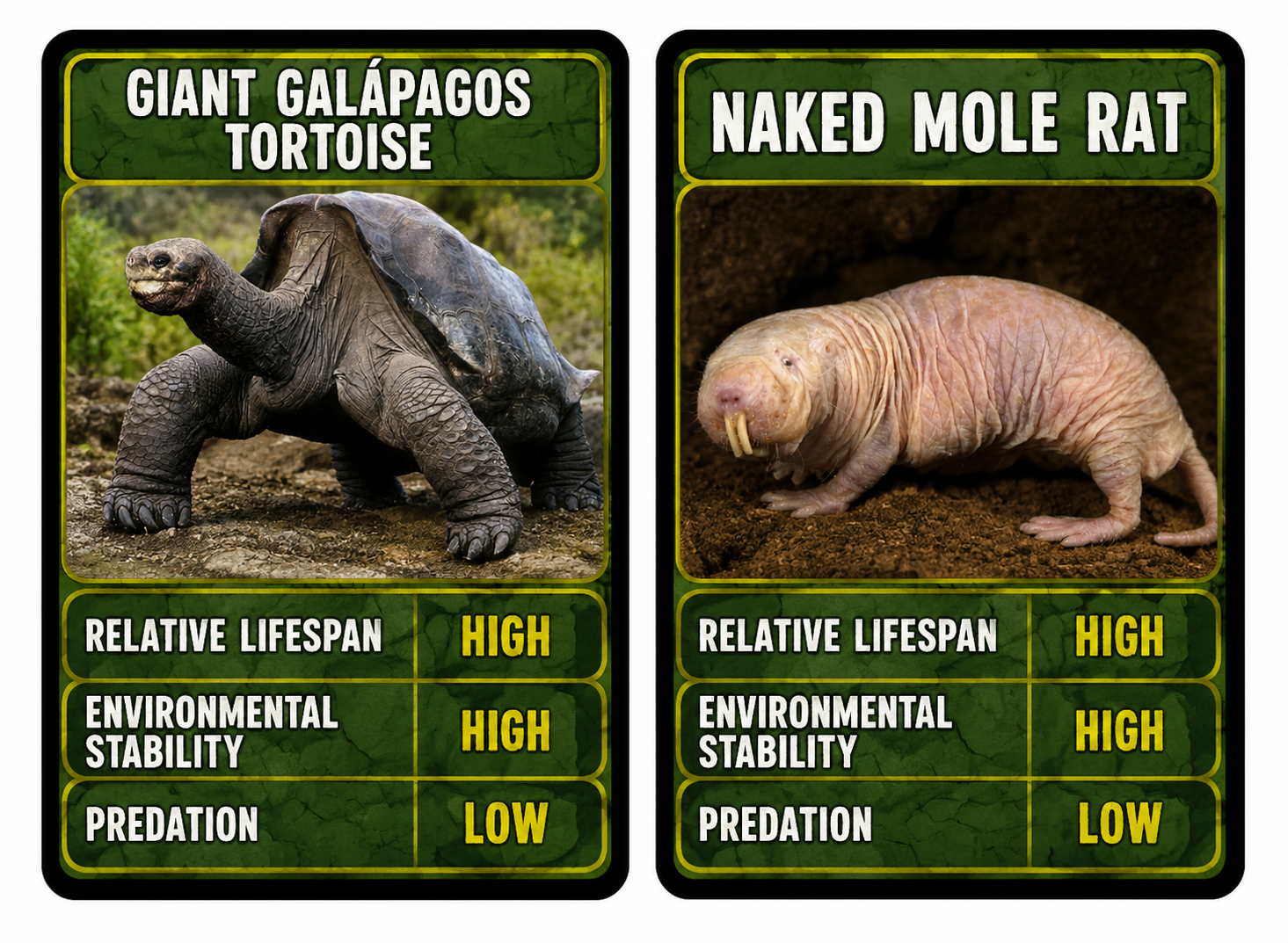
What do giant Galápagos tortoises and naked mole rats have in common, besides being very handsome? They both live in stable environments with limited predation - one on islands by the equator, the other underground - and both are unusually long-lived for their groups
One hypothesis for this longevity is that these species have evolved strong suppression of retrotransposons. Retrotransposons are ancient, virus-like elements that copy themselves around the genome, reshaping it and helping enable species to adapt to changing environments over evolutionary time
However, this flexibility to adapt comes at a cost. Retrotransposons can also activate under stress in diseased cells. They cause DNA damage and trigger an inflammatory immune response, a process that has been implicated in cancer and brain diseases
Humans still have retrotransposons. In fact, over 100 copies can potentially activate in your genome. Retrotransposons and other transposable elements make up about 45% of the human genome. LINE-1 is the only type of retrotransposon that can still copy itself to new places in the genome, and humans have about 500,000 LINE-1 copies, although only about 80 to 100 are functional - the rest have been inactivated by mutations
In long-lived species such as giant tortoises, all retrotransposon copies have been inactive for tens of millions of years. Suppressing retrotransposons may be a shared signature of long-lived species
© L1 Therapeutics 2025 · Reuse with attribution: Published by William Brandler, L1 Therapeutics · December 9, 2025
Have a question about this piece, or a collaboration in mind? Get in touch